Fart Together 2P speedrun: 12:21 Run and Practice Guide
Explore the 12:21 Fart Together 2P speedrun claim, learn what the sources confirm, and build a practical two-player training plan.
The 12:21 Run: A Benchmark Worth Investigating
A Fart Together 2P speedrun can turn a ridiculous co-op premise into a serious test of coordination. If you’re researching the Fart Together 2P speedrun labeled 12 minutes, 21 seconds, the useful question is not just how fast the players finished—it’s which details you can verify and apply to your own attempts. Separating a video’s record claim from confirmed rules matters before you copy a route, compare times, or spend hours practicing the wrong version.
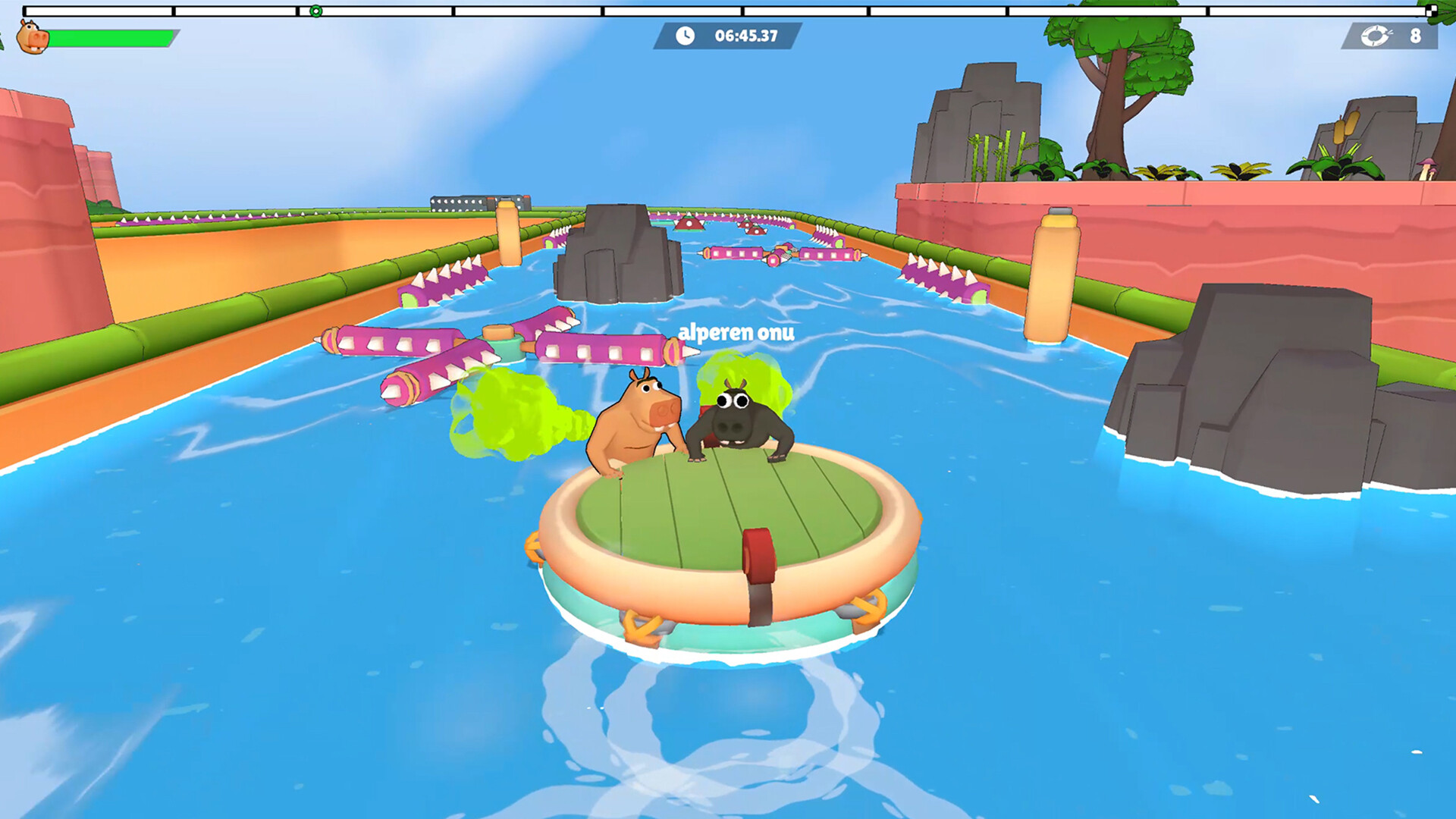
Official screenshot · Source: Steam store
The available reference is a YouTube upload titled “[WR] Fart Together 2P - 12min21sec.” Its title identifies a two-player run and claims world-record status. However, the supplied transcript contains mostly reactions and sound effects, not a route explanation.
There is also a Google Play listing for a game named Fart Together. It describes a shared boat, physics-based obstacles, and cooperative movement. The supplied sources do not establish that this mobile listing is the exact game or build used in the video.
That distinction shapes this guide: the time is a documented title claim, while the training advice below is a practical framework—not a reconstruction of footage that the transcript cannot explain.
| Detail | What the sources support | What remains unverified |
|---|---|---|
| Displayed run time | The video title states 12:21 | Timing start, finish, and exclusions |
| Player count | The title uses “2P,” indicating two players | Exact multiplayer setup |
| Record status | The uploader labels it “WR” | Leaderboard acceptance and current standing |
| Game mechanics | The mobile listing describes coordinated boat movement | Whether those mechanics match the recorded run |
| Route | A run video is linked | Specific shortcuts, inputs, and obstacle sequence |
You can inspect the 12:21 two-player run uploaded with a world-record claim as a starting point. Treat the upload as evidence to examine, rather than automatic confirmation of a current record.
Check the Game, Category, and Timing Rules First
Before chasing a Fart Together 2P speedrun time, establish what counts as a comparable attempt. Two runs with the same displayed duration may use different platforms, builds, endpoints, or loading rules.
The Google Play listing for Fart Together is an official storefront source for that mobile release’s advertised features. It describes solo play and co-op for up to four players, with each player’s actions affecting a shared boat.
That supports a broad description of the listed game. It does not independently verify the YouTube run’s platform, category rules, or record status.
Build a comparison checklist
Record these details before comparing personal bests:
- Platform and version: Identify the release and any visible build number.
- Player setup: Confirm two human players and the permitted control arrangement.
- Completion goal: Establish exactly what must be finished.
- Timer method: Determine whether timing uses real time, in-game time, or another method.
- Start and end triggers: Write down the precise events that start and stop the clock.
- Restrictions: Check whether skips, resets, glitches, or particular settings are permitted.
If you cannot find published category rules, agree on a clearly documented practice standard with your partner. That makes your own sessions comparable, but it does not create an official leaderboard category.
The arithmetic behind the title is straightforward: 12:21 equals 741 seconds. It is a useful reference number, but a meaningful comparison still requires matching rules.
For example, a 12:15 attempt would be six seconds faster numerically. It would not necessarily beat the advertised run if it excluded loading time that the other attempt included.
Study the Run Without Inventing a Route
The best way to use the Fart Together 2P speedrun reference is to create your own observation log while watching the actual footage. The supplied transcript is too limited to identify movement techniques, checkpoint behavior, or shortcuts reliably.
Start with one uninterrupted viewing. Look for the overall structure: where progress is smooth, where the players hesitate, and whether the recording shows enough information to understand the timing.
On a second viewing, pause at recognizable landmarks and write down observations. Separate what you can see from what you merely suspect.
| Observation to log | Example note format | Why it helps |
|---|---|---|
| Section boundary | “Boat reaches a recognizable platform” | Creates a repeatable split location |
| Player action | “One player acts before the other” | Helps investigate input sequencing |
| Obstacle approach | “Entry appears aligned before movement” | Suggests a testable setup |
| Recovery | “Players continue after contact” | Shows a possible alternative to resetting |
| Timing evidence | “Clock visible at this landmark” | Supports more accurate comparisons |
These are note-taking examples, not confirmed events from the supplied run.
Turn observations into tests
Suppose the footage appears to show one player waiting before an obstacle. Avoid immediately concluding that waiting is optimal. It could reflect obstacle timing, a correction, communication delay, or an input that is not visible.
Instead, formulate a narrow test:
- Use the same approach position.
- Try the apparent sequence several times.
- Compare it with your existing method.
- Record both completion time and failure frequency.
- Keep the option that performs better across repeated attempts.
This process turns a promising visual clue into evidence you can use. It also prevents one lucky success from becoming an unreliable “mandatory” strategy.
Build Two-Player Coordination Before Chasing Speed
For your own Fart Together 2P speedrun practice, communication should reduce uncertainty—not add another task.
If your version matches the storefront’s shared-boat description, both players influence the same movement problem. That makes agreed responsibilities especially useful. If the recorded game differs, adapt these drills to its actual controls rather than assuming the mobile mechanics apply.
Assign decisions, not imaginary character roles
There is no verified basis here for claiming one player has a special steering ability or a unique movement advantage. You can still divide decision-making:
- One player calls the next intended direction or target.
- The other confirms readiness before a coordinated action.
- Both use one agreed signal to stop a failing sequence.
- Either player can call out an unexpected position.
Use short, distinct words. “Ready,” “go,” and “stop” are easier to distinguish than overlapping explanations during a difficult maneuver.
| Practice drill | Method | Measure |
|---|---|---|
| Shared start cue | Begin a repeatable action on one agreed call | Successful synchronized attempts |
| Approach consistency | Reach the same landmark from the same setup | Variation in arrival position |
| Controlled correction | Practice fixing a modest mistake | Recovery success and time cost |
| Quiet section | Use only essential calls through a familiar stretch | Mistakes caused by unclear communication |
| Pressure attempt | Continue a full attempt without coaching pauses | Completion rate |
Measure consistency alongside your best time
A faster technique is not automatically a better full-run choice.
Consider a hypothetical obstacle strategy that saves two seconds when successful but loses 15 seconds when it fails. If it fails once in five attempts, its simplified average effect is:
- Four successes save eight seconds total.
- One failure loses 15 seconds.
- Across five attempts, the strategy costs seven seconds overall.
That is an average loss of 1.4 seconds per attempt, despite the attractive best-case result. This example assumes failures only cost time; a run-ending failure could make the tradeoff much worse.
For an early personal best, a slightly slower, repeatable line may be the smarter choice. More aggressive strategies become useful as your success rate improves.
Create a Practice Plan That Produces Useful Splits
A productive Fart Together 2P speedrun session needs more than repeated resets. Identify where time disappears, isolate the cause, and make one change at a time.
Choose recognizable landmarks as practice splits. These need not be official checkpoints. They simply need to be visible and consistent enough for both players to identify.
Use a lightweight log:
| Section | Best clean practice time | Typical time | Main issue |
|---|---|---|---|
| Opening | Record your result | Record your result | Inconsistent start |
| Early obstacle stretch | Record your result | Record your result | Poor approach alignment |
| Middle section | Record your result | Record your result | Conflicting corrections |
| Final stretch | Record your result | Record your result | Rushing under pressure |
The section names are placeholders, not a claimed map layout.
Prioritize a section with a large gap between its best and typical times. That gap suggests inconsistency you may be able to fix. A section that is already repeatable may offer fewer immediate gains, even if it looks technically impressive.
Try a focused 45-minute session
| Time | Activity | Goal |
|---|---|---|
| 0–5 minutes | Confirm setup and communication cues | Remove avoidable confusion |
| 5–15 minutes | Repeat one troublesome section | Find a consistent approach |
| 15–25 minutes | Compare two techniques | Measure speed and reliability |
| 25–40 minutes | Attempt full runs | Test whether practice transfers |
| 40–45 minutes | Review recordings and notes | Choose the next priority |
This is a suggested training schedule, not a documented routine used by the video’s players.
Set a reset policy before full attempts. For learning runs, continuing after a mistake gives you valuable late-game practice. For personal-best attempts, you might reset after a major early loss—but define “major” using your own splits rather than frustration.
Finally, check recording stability. **Community reports—player experience rather than verified testing—**in the supplied mobile reviews mention frequent advertisements and, in one review, crashes. These reports do not establish conditions in the YouTube run. If you use that mobile release, test whether interruptions affect practice or recording before a serious session.
A useful Fart Together 2P speedrun log should capture the version, timing method, final result, and one specific lesson. “Lost time because both players corrected at once” gives you something to fix. “Bad run” does not.
FAQ
What is the Fart Together 2P speedrun record?
The supplied YouTube title claims a world record of 12 minutes, 21 seconds. The available material does not include leaderboard verification or category rules, so it should be described as an uploader-claimed record, not a confirmed current world record.
Does the Google Play listing describe the game in the video?
That connection is not established by the supplied references. The listing describes a physics-based cooperative boat game, but the video transcript does not provide enough identifying information to confirm the same platform or build.
What should two players practice first?
Start with repeatable approaches and clear action cues. Agree on who calls the next move, use short signals, and practice recovering from small errors. Once both players can reproduce a section reliably, test faster alternatives against that baseline.
Can I copy the 12:21 route from the transcript?
No. The transcript mostly contains reactions and sound effects, so it cannot support a reliable route guide. Watch the linked footage directly, document visible landmarks and actions, and test suspected techniques before treating them as part of your route.
Related Guides
Fart Together speedrun: 2P Practice and Timing
Build a Fart Together speedrun practice plan with 2P coordination tips, timing checks, and context for a video labeled as a 12:21 world record.
Fart Together world record: How to Verify a Run
Looking for the Fart Together world record? Learn what the available sources confirm, how to verify a run, and which timing details matter.
Fart Together first time: A Couple's Comfort Guide
Nervous about farting in front of your partner? Learn how to handle the first time, talk about boundaries, and keep an awkward moment comfortable.
Fart Together 2P: Two-Player Co-op Guide and Tips
Explore Fart Together 2P, including two-player support, online co-op details, teamwork tips, PC requirements, and the planned Early Access release.
Fart Together demo gameplay: Co-op Tips and Guide
Explore Fart Together demo gameplay, 2–4-player raft controls, teamwork tips, PC requirements, and how to download the free Steam demo.